New sensory garden supports pupils at Farnborough Primary School

Zoe Gater

outdoors

Cherrywood Community Primary School in Farnborough has opened a new sensory garden, offering pupils a peaceful, inclusive outdoor space, created with support from the 2025 Kebur Community Project Awards.

A new sensory garden is providing a safe and inclusive environment for pupils at a primary school in Farnborough thanks to the 2025 Kebur Community Project Awards.

Applications for the 2026 awards which offer up to £3,000 worth of garden materials to support community groups, schools and charities in improving outdoor spaces for people and wildlife are now open.

Cherrywood Community Primary School received £1,500 of garden materials to help create a calming, inclusive outdoor space designed to support pupils’ wellbeing.

The new Addagrip resin-bound surface was installed in February with the help of local contractor Esme Garden Design and Landscaping. The materials for the surface were jointly funded by Kebur Garden Materials and Addagrip.

The wider sensory garden will feature tactile planting, fragrant herbs, raised beds, reflective spaces and wildlife-friendly elements such as bug houses and pollinator-attracting plants.

Claire Hills, Social Emotional and Mental Health Lead at the school said: “This sensory garden will provide a safe and inclusive environment, particularly supporting children with autism, sensory processing needs, and any pupil who would benefit from a peaceful, nurturing outdoor space.”

Jo Holtom, Business Partner at Kebur Garden Materials, called the installation “a fantastic example of what can be achieved when local businesses collaborate”.

To apply for the 2026 awards please visit kebur.co.uk/community.

Discover National Garden Scheme spaces open near you

Zoe Gater

outdoors

Need some inspiration for your garden? Visit an NGS garden near you, as part of another record-breaking fundraising year thanks to the National Garden Scheme.

Every year, thousands of people up and down the country open their gates to their gardens, their pride and joy, lovingly crafted and tended to, ready to welcome in visitors who come to marvel at their handiwork, pick up tips and no doubt, copy a few ideas – all to raise some funds for the charities supported by the National Garden Scheme.

Find out which ones are open near you to explore and make the most of the brighter days.


National Garden Scheme spaces to visit in Wiltshire

Zoe Gater

outdoors

Liz Nicholls invites you to visit a garden near you, as part of another record-breaking fundraising year thanks to the National Garden Scheme (NGS).

This spring, gardens big and small will open their gates, inviting visitors like you to wander among blooms and find moments of calm.

The NGS fundraiser reached a record £3.8 million total last year, in its most successful year yet, supporting nursing and health charities. With 3,000 gardens across the UK opening this year – including 500 newbies. Could you help make 2026 yet another charity record-breaker?

A country garden at Westwind, Manton

One garden which will welcome visitors, by appointment, between 11th May & 14th June, is Westwind in Manton, near Marlborough. This relaxed informal country garden, set in four acres including a 2½ acre meadow and woodland also hosts weekly outdoor learning for the village school and welcomes artists and photographers throughout the seasons.

A garden built over generations

The garden’s proud owner Kate Stewart-Hilliar tells us: “Westwind first opened for the NGS in 2023 so this will be our fourth season. We’re popular with garden clubs and some from the u3a groups. It is a great opportunity to meet like-minded people and I’ve met some truly lovely visitors. They usually walk around the property for about an hour then enjoy tea or coffee and cake on the terrace after and ask questions about the journey of the garden.

International visitors and shared gardening spirit

“Last year, a family of four came from America to visit during their tour of the UK. They brought their own picnic and we had some wonderful conversations. I have another group coming from America in May. If anyone asks for cuttings we happily let them have some. Real gardeners always share with other gardeners and lots of plants in Westwind had started off as cuttings from other gardens.”

Seasonal highlights at Westwind

“By May, the poppies and alliums should be out in full force and there will be lots to see around the property. We have a pond on the terrace so guests can have tea and watch busy dragonflies.”

The garden is a labour of love, 40 years in the making. “My late mother and stepfather created the garden over the time and have left it to me as their legacy,” adds Kate. “I was new to gardening five years ago… and am still very new to it!”

A garden with a personal legacy

“My stepfather was a well-known photographer and, back in the day, the garden appeared in many magazines. The village school’s weekly visits are my favourite – it’s so nice to be able to share the garden with the next generation.

“My mother was a teacher when we lived in Ireland, so she found this such a joy. It also helped her during her short journey with Motor Neurone Disease. She enjoyed watching and interacting with the children and she said the garden had finally found its purpose.”

She also highlights the importance of simple pleasures: “Guests like cake so I tend to buy from Vicarage Lane who have a good variety and are a great success.”

Nearby attractions such as Avebury, The Oddfellows Arms pub, and Marlborough town make it a rewarding day out.

A riverside garden at The Old Mill, Ramsbury

Another gem you can explore, on 31st May and 14th August, is The Old Mill in Ramsbury. Over 30 years its owners Annabel & James Dallas have transformed the garden from a mainly unseen space to a unique accolade to the wild and partially tamed beauty of the River Kennet and its side streams.

They explain how the garden evolved from a space where children played freely into one shaped by both nature and careful planting, with vegetables, flowers, and later dahlias extending the seasonal colour. The use of chemicals is kept to a minimum to support insect life and encourage birds and wildlife.

A record-breaking impact for health and wellbeing

“The generosity of our garden owners and volunteers continues to amaze me,” says NGS Chief Executive Dr Richard Claxton who has created gardens for hospitals and hospices.

“Each cup of tea served, each garden opened makes a difference to health and care charities across the UK. I’ve always been passionate about the effect gardens can have on wellbeing.

“Gardening and spending time in green spaces can reduce stress, lower blood pressure, and improve mood. Programmes such as the NGS not only raise vital funds but also promote wellbeing for visitors and volunteers alike. Spring and summer are a wonderful time to explore, and children often go free, so it’s a very pocket-friendly outing for the whole family.”

Plan your visit

For full listings, ticket info, and garden opening details, please visit ngs.org.uk

National Garden Scheme spaces to visit in Hampshire

Zoe Gater

outdoors

Need some inspiration for your garden? Visit an NGS garden near you, as part of another record-breaking fundraising year thanks to the National Garden Scheme.

This spring, gardens big and small across Hampshire and beyond will open their gates, inviting visitors to wander among blooms, breathe in the scents of herbs and flowers and find moments of calm.

The NGS fundraiser reached a record £3.8 million last year, in its most successful year yet, supporting nursing and health charities nationwide. With 3,000 gardens across the UK opening this year – including 500 newbies – could you help make 2026 yet another charity record-breaker?

A charming cottage garden in Alton

Spend an afternoon at The Thatched Cottage in Alton GU34 3EG and don’t be surprised if you see Tom and Barbara wandering around, not the owners, but a pair of ducks who are lucky enough to call the 16th century cottage home.

When David and Cally Horton moved in it had been somewhat neglected but with a helping hand from a neighbour, they restored it to its bountiful best and opened to the public. The couple consider themselves “so lucky to have the opportunity to raise funds for the amazing nursing charities supported by the NGS”.

The power of gardens to lift spirits

Cally’s garden is a testament to the power of the natural world: “During lockdown we provided somewhere for people to mingle safely. A depressed woman admitted that she had woken up with nothing to look forward to, so came to look at a garden. As she left, she said that she was now looking forward to the week ahead. This is the sort of thing that makes it worthwhile.

“Our visitors sit with and chat to complete strangers over tea and delicious cake. Very few people leave without saying thank you, what a wonderful garden it is and how it has given them inspiration and ideas for their own.”

Children and dogs on leads are also welcome to discover all that lies within, not least a restored gypsy caravan (complete with crystal ball and guard dog!). Take time to savour the delicious cakes and a cuppa at tables under cover in the garden too.

A record-breaking impact for health charities

“It’s extraordinary to see so many gardens welcoming visitors, and the generosity of our garden owners and volunteers continues to amaze me,” says NGS Chief Executive Dr Richard Claxton, who has created gardens for hospitals and hospices. “Each cup of tea served, each garden opened makes a tangible difference to health and care charities across the UK.

“I’ve always been passionate about the effect gardens and gardening can have on wellbeing. Gardening and spending time in green spaces can reduce stress, lower blood pressure, and improve mood. Programmes such as the NGS not only raise vital funds but also promote wellbeing for visitors and volunteers alike. Children can often go free, so it’s a very pocket-friendly outing for the family to enjoy.”

A traditional garden at Binsted Place

For many opening their gardens is a reason to maintain their plots to perfection, try new planting ideas, and connect with fellow horticulturists.

Max and Catherine Hadfield’s 17th century farmhouse Binsted Place in Alton GU34 4PQ is a series of rooms covering around one and a half acres in a traditional style with a lily pond and productive vegetable garden and orchards – the fruits of these labours are very much Max’s domain, while Catherine can often be found giving some TLC to her fragrant roses.

She says: “I spend many hours in my garden, as does my husband and, most of all, our wonderful part-time gardener Dom Brooking. The idea that it was good enough for others to want to visit and to donate money to charity was very appealing.

“We have also opened for other local charities: Cardiac Rehab, Phyllis Tuckwell Hospice and our village church and hall. I’m always so glad to think that our hard work can give others pleasure and make a contribution. We always enjoy meeting the lovely people who visit, which is an added bonus!”

The beauty and variety of NGS Gardens

Across the UK, NGS gardens range from tiny urban plots to sprawling country estates. Each garden has its own character, whether it’s a cottage garden full of traditional charm, a chalk garden of rare botanical specimens, or a sculpture-filled landscape. And with by-arrangement visits, even smaller or private gardens can share their beauty with visitors.

Plan your visit

So this year, make time to explore Hampshire’s best blooms and discover the therapeutic magic of gardens. Whether you’re an avid gardener or a first-time visitor, the NGS, which celebrates its centenary in 2027, opens doors – and hearts – across the county.

For full listings, ticket info, and garden opening details, please visit ngs.org.uk.

National Garden Scheme spaces to visit in Buckinghamshire

Zoe Gater

outdoors

Liz Nicholls invites you to visit a garden near you, as part of another record-breaking fundraising year thanks to the National Garden Scheme (NGS).

This spring, gardens big and small across Bucks and beyond will open their gates, inviting visitors just like you to wander among blooms, breathe in the scents of herbs and flowers and find moments of calm.

The NGS fundraiser reached a record £3.8 million total last year, in its most successful year yet, supporting nursing and health charities nationwide. With 3,000 gardens across the UK opening this year – including 500 newbies. Could you help make 2026 yet another charity record-breaker?

A Beaconsfield garden with heart

Bernadette and John Thompson have been welcoming visitors to their curvaceous Barbara Hunt-designed garden in Beaconsfield for more than 20 years with the NGS.

“Although our garden isn’t huge, we attract plant-lovers who spend at least an hour looking round, chatting to other visitors and us,” Bernadette tells me. “It’s a joy to share tea and cake and watch people enjoy the space we love so much.”

The couple say that opening their garden for visitors is as much about community as it is about flowers.

“We’ve welcomed groups from as far afield as France and Switzerland as well as the UK,” adds Bernadette.

Their garden in Brownswood Road opens by arrangement between now and the middle of September for groups of up to 15 people; adults £4pp, children free.

Please email tbernadette60@gmail.com for info.

Must-visit gardens across Bucks

Other Bucks gems include Overstroud Cottage, an artistic chalk garden on two levels overlooking Great Missenden. With a collection spanning 17th- and 18th-century plants, auriculas, hellebores, peonies, rambling roses, and a lily pond, it offers both history and horticultural delight.

Visitors can attend an open afternoon, 2–5pm on Easter Sunday, 5th April, with cream teas at the parish church; £4.50pp, children free.

Bledlow Manor, near Princes Risborough, includes 12 acres of sculpted gardens, water features, and walled kitchen gardens; it will welcome visitors 2–5pm on 19th July, with tea, coffee, and cake available.

Copperkins Lane in Chesham Bois also offers a beautiful local retreat, with bespoke visits for groups throughout the season.

A record-breaking impact for health charities

“It’s extraordinary to see so many gardens welcoming visitors, and the generosity of our garden owners and volunteers continues to amaze me,” says NGS Chief Executive Dr Richard Claxton who has created gardens for hospitals and hospices.

“Each cup of tea served, each garden opened makes a tangible difference to health and care charities across the UK. “I’ve always been passionate about the effect gardens and gardening can have on wellbeing.

“Gardening and spending time in green spaces can reduce stress, lower blood pressure, and improve mood. Programmes such as the NGS not only raise vital funds but also promote wellbeing for visitors and volunteers alike. What’s more, spring and summer are a wonderful time to explore, and children can often go free, so it’s a very pocket-friendly outing for the whole family to enjoy.”

More than just a garden visit

Opening a garden is about more than just fundraising. For many owners, it’s a reason to maintain their plots to perfection, try new planting ideas, and connect with fellow horticulturists.

In Beaconsfield, John and Bernadette are happy to report that the rhythm of preparing for NGS visitors ensures that their garden remains vibrant and cared for all year.

The healing power of green spaces

Across the UK, NGS gardens range from tiny urban plots to sprawling country estates. Each garden has its own character, whether it’s a cottage garden full of traditional charm, a chalk garden of rare botanical specimens, or a sculpture-filled landscape. And with by-arrangement visits, even smaller or private gardens can share their beauty with visitors.

Plan your visit

So this year, make time to explore Buckinghamshire’s best blooms and perhaps discover the therapeutic magic of gardens. Whether you’re an avid gardener or a first-time visitor, the NGS, which celebrates its centenary in 2027, opens doors – and hearts – across the county.

With tea, cake, and the chance to support local nursing and health charities, a visit is both a treat and a contribution.

For full listings, ticket info, and garden opening details, please visit ngs.org.uk.

National Garden Scheme spaces to visit in Berkshire

Zoe Gater

outdoors

Need some inspiration for your garden? Visit an NGS garden near you, as part of another record-breaking fundraising year thanks to the National Garden Scheme.

I‘ve gardened for a living for over 60 years now,” says Alan Titchmarsh CBE, “and for pleasure for almost 70 years. It’s so heartening to think that something I love – carried out by thousands of extraordinarily generous garden owners – helps to improve the lives of so many people right across the country every day.

“For me the National Garden Scheme is the heart and soul of Britain, and proof of just what good can come from looking after your own little bit of the planet and sharing it with others.”

Step inside Berkshire’s most beautiful gardens

This spring, gardens big and small across Berkshire and beyond will open their gates, inviting visitors to wander among blooms, breathe in the scents of herbs and flowers and find moments of calm.

The NGS fundraiser reached a record £3.8 million total last year, in its most successful year yet, supporting nursing and health charities nationwide. With 3,000 gardens across the UK opening this year – including 500 newbies. Could you help make 2026 yet another charity record-breaker?

Opening a garden to give back

Patricia Vella and Jon Black opened their Wargrave garden as a way to “give back”, having been introduced to the NGS through Jon’s aunt.

“When we visited we would often take her to visit one of the many NGS gardens in Essex, where she lived. She suffered from dementia in her last years, but gardens always reached her – and she enjoyed the tea and cake! After she passed, we saw an appeal from Berkshire NGS for new gardens to open and felt it was an opportunity to give back.”

Her haven in Beverley Gardens RG10 8ED has primarily Mediterranean and exotic planting and “is intended to evoke a sense of being on holiday” and with their young grandniece a frequent visitor, it is also designed with exploration in mind, the chickens and ducks in particular are always an attraction for youngsters.

“We want our visitors to have a relaxing afternoon out with tea and homemade cake and were delighted when one of our NGS visitors settled down on the hammock seat with a book and fell asleep,” adds Patricia.

A record-breaking impact for health charities

“It’s extraordinary to see so many gardens welcoming visitors, and the generosity of our garden owners and volunteers continues to amaze me,” says NGS Chief Executive Dr Richard Claxton who has created gardens for hospitals and hospices.

“Each cup of tea served, each garden opened makes a tangible difference to health and care charities across the UK. Gardening and spending time in green spaces can reduce stress, lower blood pressure, and improve mood. Programmes such as the NGS not only raise vital funds but also promote wellbeing for visitors and volunteers alike. What’s more, children can often go free, so it’s a very pocket-friendly outing for the whole family to enjoy.”

A waterside retreat in Newbury

For many owners, it’s a reason to maintain their plots to perfection, try new planting ideas, and connect with fellow horticulturists. The ‘social’ aspect of opening a garden is invaluable for Karen Swaffield whose pretty waterside garden at Island Cottage, Newbury RG14 5HT, is set between the River Kennet and the Kennet and Avon Canal. Karen loves to see visitors enjoying her garden.

“The visitors are always so appreciative and it’s nice to just chat about garden things with like-minded people. I’ve picked up lots of tips and met some lovely people. I have given a talk about how the garden has developed with some pics and video, which was nerve-racking but really enjoyable.

“People enjoy my carrot cake and cream teas! I have a team of friends who help with teas and chats, so it’s also a get-together time.”

From stud farm to garden sanctuary

Another garden which will welcome visitors is Deepwood Stud Farm near Maidenhead. Visitors enjoy four acres of formal and informal gardens, including a small lake with a Monet-style bridge, set within a 25-acre stud farm.

Its owner Christabel Goodwin tells us: “We’ve been opening our garden through the NGS for about 12 years and have found it a wonderful experience. It’s great to have a reason to make an effort in the garden and the visitors are – without exception – delightful.

“One lady returned a few months later with lots of little fish for the pond and people are always offering me cuttings or spare plants. I think our visitors also love being able to see the horses through the windows of the herbaceous border.”

The healing power of green spaces

Across the UK, NGS gardens range from tiny urban plots to sprawling country estates. Each garden has its own character, whether it’s a cottage garden full of traditional charm, a chalk garden of rare botanical specimens, or a sculpture-filled landscape. And with by-arrangement visits, even smaller or private gardens can share their beauty with visitors.

Plan your visit

So this year, make time to explore Berkshire’s best blooms and perhaps discover the therapeutic magic of gardens. Whether you’re an avid gardener or a first-time visitor, the NGS, which celebrates its centenary in 2027, opens doors – and hearts – across the county.

For full listings, ticket info, and garden opening details, please visit ngs.org.uk.

Celebrate British Pie Week at The Savill Garden

Zoe Gater

outdoors

A special British Pie Week menu at The Savill Garden will showcase venison sourced from Windsor Great Park itself, offering visitors a true field-to-fork dining experience this March 2026.

Visitors to The Savill Garden can enjoy a true taste of the estate this British Pie Week, as the garden’s restaurants shine a spotlight on a signature venison and ale pie – made with meat sourced directly from Windsor Great Park.

Taking place from Monday 2 to 8 March 2026, the celebration highlights a field-to-fork approach, featuring parkland venison paired with pale ale from Windsor & Eton Brewery, topped with golden puff pastry and served just steps from where the deer roam.

Meanwhile, at the Gallery Cafe, guests can enjoy a choice of hearty, freshly made pies for £14, each served with two salads.

Menu highlights include a chicken, ham hock and leek pie with a creamy sauce and shortcrust pastry lid, alongside a cauliflower and spinach pie filled with spiced cauliflower, chickpeas and lentils in vegan pastry.

For those looking for a more indulgent dining experience, The Savill Garden Kitchen is serving a Pie Week special priced at £20.

The elevated dish features venison braised with pale ale and root vegetables, topped with puff pastry and served with spring greens and creamy mash.

Set within 35 acres of ornamental gardens and woodland, The Savill Garden has been welcoming visitors since 1932.

British Pie Week offers the perfect opportunity to explore seasonal displays before sitting down to enjoy a dish that reflects the flavours — and provenance — of the surrounding park.

For more information, visit Windsor Great Park’s website.

11 best places to see snowdrops in Oxfordshire

Round & About

outdoors

Oxfordshire boasts some of the UK’s most beautiful snowdrop displays. Appearing from late January through to mid-February, these delicate winter blooms brighten up gardens, woodlands and estates across the county – with plenty of lovely spots to enjoy a scenic snowdrop walk.

Across Oxfordshire, carpets of snowdrops bring life back to woodland paths and formal gardens, signalling that the seasons are beginning to turn – goodbye winter!

Looking ahead to 2026, Round & About rounds up 11 standout locations around Oxfordshire and its borders to spot these impressive flourishes.

1. Blenheim Palace Gardens

Wave goodbye to winter as Blenheim Palace’s vast green spaces fill with white flowers carpeting the Formal Gardens, the Grand Cascade and the new Churchill Memorial Garden, offering a stunning winter spectacle alongside other early blooms such as primroses and hellebores.

Plus, seize the chance to shake off the winter blues with a refreshing walk through 2,000 acres of nature – whether that’s a casual stroll through the gardens or marching out across the wider estate.

2. Waterperry Gardens, near Wheatley

Just east of Oxford, Waterperry Gardens is a classic early-season favourite, with snowdrops appearing throughout the ornamental gardens, orchard and woodland areas from late January into February.

Gentle drifts of white flowers weave beneath trees and along pathways, often joined by hellebores and other winter interest plants. With its peaceful setting, historic planting and café on site, Waterperry offers a relaxed and rewarding spot for a winter garden stroll as the first signs of spring emerge.

3. Kingston Bagpuize House & Gardens

Located in the Vale of the White Horse near Abingdon, Kingston Bagpuize House’s tranquil gardens offer a beautiful early-season escape, with snowdrops spreading through woodland areas and parkland in late winter.

Visiting from early February – including during its popular Snowdrop & Spring Plant Fair in late February 2026 – is a great way to enjoy subtle seasonal colour and a relaxed countryside walk before spring fully arrives.

4. Braziers Park in Wallingford

Set in the rolling countryside near Wallingford, Braziers Park offers a more informal and quietly beautiful setting to spot snowdrops in late winter.

Clusters of these early blooms can be found scattered through the grounds and woodland edges, often alongside other signs of the changing season. With its peaceful atmosphere and rural surroundings, Braziers Park is a lovely choice for a gentle winter walk and a moment of calm before spring takes hold.

5. Swyncombe Snowdrops Walk & St Botolph’s Church

Up in the Chiltern Hills, the pretty hamlet of Swyncombe and St Botolph’s Church are known for charming displays of snowdrops carpeting the churchyard in February.

Passing along the Ridgeway National Trail, across fields, woodland and the Swyncombe Estate with hillside views of the Chilterns below, it’s a popular spot for informal snowdrop-themed walks – along with snowdrop teas on selected weekends.

6. Cholsey & Thames Paths

For a quieter walk, take the stretch of the Thames Path around Cholsey, where you can meander through riverside meadows, marshes and willow scrub.

Along the way, you’ll find subtle bursts of seasonal colour, early wildflowers and wildlife, making for a refreshing escape into the Oxfordshire countryside.

7. Oxford Botanic Garden

In the heart of the city, Oxford Botanic Garden offers magical snowdrop displays in the historic Walled Garden and other sheltered borders, with the garden open daily in February.

During your visit, stroll winding paths past rare flora, snap the perfect seasonal shot and soak up the atmosphere. Peak bloom usually falls between late January and early February.

8. Harcourt Arboretum, near Nuneham Courtenay

A sister garden to Oxford Botanic Garden, Harcourt Arboretum’s early spring displays include snowdrops scattered through its woodlands and mixed borders – especially in drifts close to pathways and around the bases of its tall trees from late January to February.

The arboretum’s open landscapes and quieter trails make it a pleasing contrast to more formal garden displays.

9. Thenford Arboretum

Located near Banbury, just over the Oxfordshire border, Thenford Arboretum is home to one of the most important snowdrop collections in the country, with over 600 different species and cultivars on display.

Visitors can explore the gardens during popular seasonal snowdrop walks, where sweeping drifts of delicate white blooms appear beneath mature trees and along winding paths. Having opened for snowdrop walks for over a decade, Thenford has become a must-visit destination for Galanthus enthusiasts and winter garden lovers.

10. Badbury Hill

While not a formal snowdrop destination with organised events like others on this list, the wooded hills and quiet lanes around chalky countryside such as Badbury Hill – a former Iron Age fort – can be wonderful for early spring strolls.

Here, patches of snowdrops and other first blooms may peek through grassy verges and woodland edges as the season begins. It’s also a great spot for a scenic hike, with chances to spot wildlife including red kites, buzzards and fallow deer.

11. Evenley Wood Garden, near Banbury

Just over the border, featuring over 80 varieties – including ‘Evenley Double’, ‘Hill Poe’ and ‘Lady Beatrix Stanley’ – Evenley Wood Garden near Banbury provides carpets of white flowers in late winter within its 60-acre woodland setting.

The garden has proven a popular spot for snowdrop enthusiasts keen to seek out rarer Galanthus varieties, some of which can fetch very high prices among specialist collectors.

Please note, opening times and peak blooms may vary depending on the weather, so it’s worth checking ahead before planning your snowdrop walk.

Lead image © Yoksel Zok / Unsplash

Experience the Magic of Heathland This Summer at Heath Week 2025!

Round & About

outdoors

Thames Basin Heaths Partnership Heath Week events run from July 28th to August 3rd & they hope to see you there! 

Discover the Magic of Heath Week 2025 with Thames Basin Heaths Partnership

Thames Basin Heaths Partnership (TBHP) invites you to join Heath Week 2025 from July 28th to August 3rd. This free, week-long celebration is packed with family-friendly activities to help protect the precious heathland across Surrey, Berkshire, and Hampshire.


Explore, Learn, and Protect Heathland Together

Heathland is a rare and beautiful ecosystem that supports unique wildlife like nightjars, rare butterflies, and six native reptile species. During Heath Week, you can:

  • Discover fascinating heathland wildlife
  • Take part in interactive quizzes and creative nature crafts
  • Explore scenic trails and join expert-led walks and talks
  • Meet the passionate TBHP team and partners dedicated to conservation

If you bring your dog, look out for Heathland Hounds offering free advice, dog treats, and info about new dog-friendly walks.


Heath Week 2025 Event Highlights

Monday, 28 July

  • Butterflies and Other Things with Wings, Chobham Common, 10am–1:30pm
  • Wildfire Awareness Roadshow, Wildmoor Heath, 10am–2pm
  • Butterfly and Reptile Walk (RSPB), Blackbushe, 10:30am–12:30pm*
  • Nightjar Walk, Whitmoor, 8pm–10pm*
  • Marvellous Moths, Heather Farm, Horsell, 9pm–12am*

Tuesday, 29 July

  • Heathland Insects, Horsell Common, 10am–2pm
  • Forestry Finds (Forestry England), Bramshill Plantation, 10am–2pm
  • Sensory Scavenger Hunt, Wildmoor Heath, 10am–2pm

…and more events throughout the week

(Booking required for some events)

View the full event calendar and book your spot here → (internal link suggestion)


Why Your Participation Matters

By joining Heath Week, you help raise awareness of this special habitat. Your involvement supports conservation efforts that protect heathland’s rare wildlife and natural beauty. Whether you’re a nature enthusiast, dog walker, or family looking for outdoor fun, Heath Week offers a wonderful way to connect with nature.


Plan Your Visit

Mark your calendar, bring your family and friends, and get ready to enjoy a week of discovery, fun, and conservation. Learn more about the Thames Basin Heaths Partnership’s work and other year-round events at TBHP’s website.

Please note events are subject to change. Follow the events calendar for up-to-date information here.

Bear Grylls Kids Survival Guide

Liz Nicholls

outdoors

Bear Grylls’ Survival Academy has created The Go Wild guide – developed with snack brand Nature Valley – with eight free ways to keep active kids satisfied this summer in their own home or the local park.

1. Try foraging for food

Fall in love with nature by foraging for herbs in your own garden, terrace, or kitchen, or look outside to try and find some wild plants growing! To get set up for foraging, you’ll need a basket and some gloves before heading out to your local park, field, wood, or nature reserve.

Any of these could be growing nearby:

• Purslane – also known as hogweed, purslane is a leafy green plant which can be used as an herb and salad vegetable. Will be in season mid-summer!

• Raspberries – wild raspberries can grow in hedgerows from mid-August and may be smaller than shop bought but are just as tasty!

• Blackberries – similar to raspberries but darker purpley-black in colour, these will also be ripe and ready for picking from midsummer

• Wild Garlic – although this may not be growing in the summer, it’s a good one to know as will be ready to pick and in season next Spring!

2. Get to know the skies

(Great for small children) – the clouds are full of all sorts of hidden animals; you just need to look carefully for them! To try your hand at zookeeper, pick a nice spot in the garden or the local park with a picnic and try spotting as many animal-shaped clouds as you can. Essential to take a notebook and pen or pencil so that you can draw them too.

If you’re waiting to learn a bit more about the clouds, they can also be used to try and predict the weather!

Simply look to the skies to identify these five formations:

• Cumulus: Detached clumps of cloud composed of water droplets that form low and indicate fair weather. Have flat bases and heaped tops and look a dazzling white in the sunshine.

• Altocumulus: Appears as rolls of cloud, or layered patches in the mid-level region. Commonly found between warm and cold fronts, so can precede bad weather.

• Cirrus: Detached, wispy clouds, formed of ice crystals. Wavy appearance is caused by wind movement. Can indicate a change in the weather. Also known as mares’ tails.

• Cirrocumulus: High patches of cloudlets made up of ice crystals that never cast self-shadows. Usually seen after rain, indicating improving weather.

• Cumulonimbus: Known as thunderclouds, these have low dark bases and extend many miles up into the atmosphere. Produce brief, heavy downpours, and sometimes lead to hail and lightning.

And you can also do this at night! Test your navigation skills by looking to the skies!

In the northern hemisphere, look for a distinctive winter constellation – Orion. He is easy to spot as there are 3 prominent stars more or less equal distance apart in a line and that is Orion’s belt. Under his belt there is 3 start that represent his sword. When the stars of Orion’s sword are vertical in the night sky, and you are facing him, you are facing South.

In the southern hemisphere, scan the skies for one of the brightest constellations – the Southern Cross (or ‘Crux’). This video illustrates how easy it is to find South…

3. Learn how to read and create maps

Prevent yourself from ever getting lost by mastering the art of Cartography and learning how to draw and make maps. This may help you map out your local nature spot or create a fun game where you can hide messages in the park for friends to find later on.

Today, most maps are printed on computers, but you can try making one the traditional way, by grabbing a compass and some paper and pens and getting outside. Start by carefully mapping and naming landmarks you see such as ponds, interesting or weird looking trees, and places where certain animals live. You can make a general map with physical landmarks or try out a thematic map with a specific theme to suit your friends.

4. Tell the time from the sun

Make a DIY sundial and compass to see where you are and the time!

Equipment:

A long stick to use as the central shadow marker
Some rocks to mark North, East, South, and West
A watch, as a timer!
Sunshine!

Instructions:

1. Place your stick in the ground and mark the end of the shadow with one rock

2. Wait 30 minutes and then mark the end of the shadow with the second rock

3. The first rock will be your West point, and the second East. Now mark North and South

4. There you go – you have a compass!

5. Make the ultimate den

A simple and fun thing to do in your back garden, on a picnic, when camping – or even in your bedroom – here’s a simple guide from the den making masters at BGSA on how to make the best den

Equipment:

A sheet
Two trees or structures at home that are safe to attach the sheet to
Some rope
Decorations of your choice

Instructions:

1. Select a suitable area between any two trees or points for your den

2. If outside, check for any loose branches then run the rope between the trees

3. Drape the sheet over the rope, and then weigh down each corner with a rock, log, or something heavy to hold it

4. Inside your structure, add blankets, leaves, or anything else to make the den cosy and fun inside!

6. Go incognito!

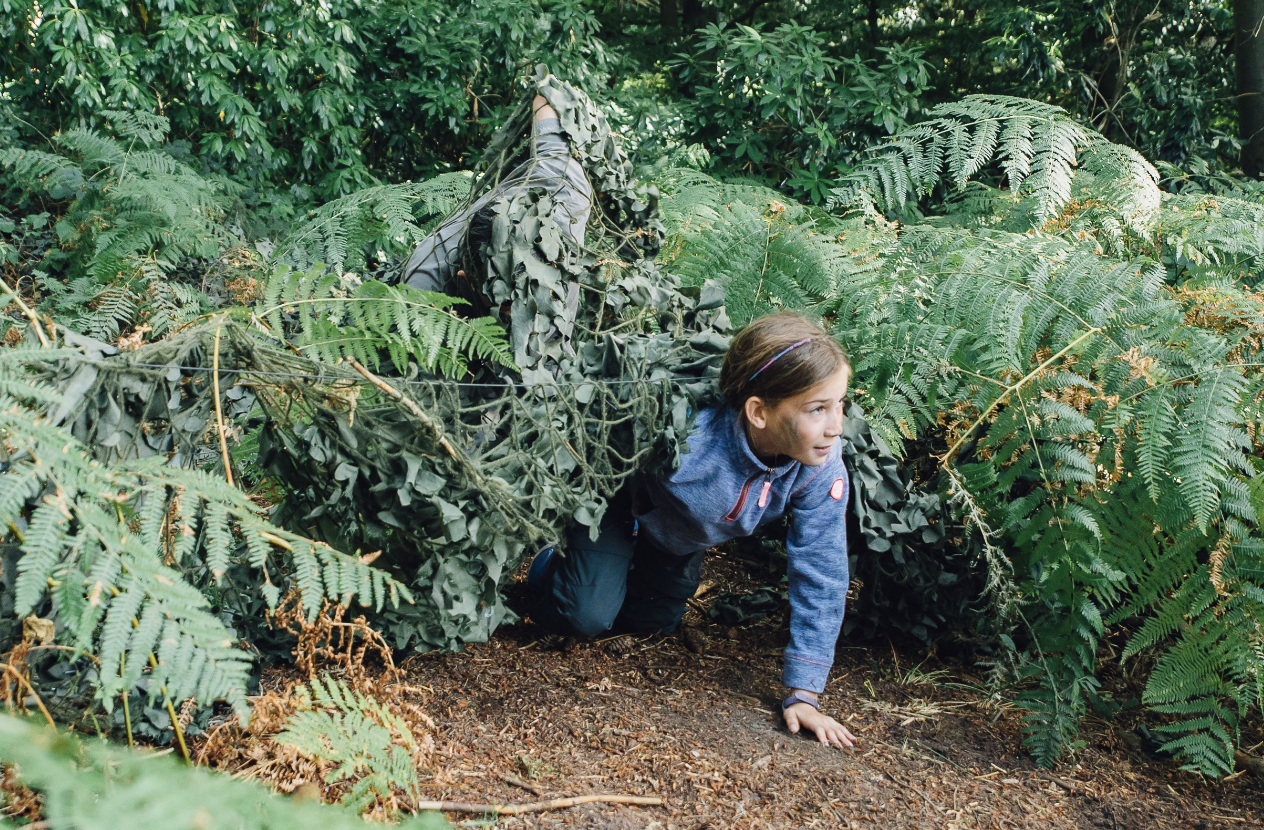
Try and make yourself invisible by learning the five s’s of effective camouflage.

When we’re in the wilderness and our survival relies on us remaining hidden and hard to find, there are five key aspects you need to ensure you’re addressing as you make your way to safety. Helpfully, they all begin with the letter S!

1. SHAPE

Find ways to break up your shape with foliage from your immediate surroundings so that the outline of a human figure is no longer obvious.

2. SHINE

Look carefully at your clothes and equipment to conceal any shine. This could be anything from your watch to the lace ringlets on your boots – use mud to cover everything you can (including your face and exposed skin) but don’t go overboard with the mud either as this in itself could also draw attention.

3. SMELL

Your smell will often betray you long before you’re seen or heard. To minimise exposure, eat all your food raw – if you can! – as the smell of cooked food (and your fire) will carry.

4. SHADOW

Where possible, do as much of your movement at night, where your shadow or silhouette will not expose you.

5. SOUND

All your movements should be slow and purposeful so as not to attract any unwanted attention. If you are moving with someone else, use hand signals instead of your voice to communicate

As long as you are mindful of the above five elements, you’re well on your way to making it to safety and having an incredible story to tell on the other side!

7. Learn the essential knots

Knot tying is an essential part of outdoor adventures, whether you’re building camp, tying your laces, or flying a kite!

Practise these three knots at home until you can master them:

A person holding a bow and arrow Description automatically generated

• Overhand Knot – this is the easiest one of all and is what our hands would automatically do if we were handed a piece of rope or string and told to put a knot in it. A key thing to know about this one, if you tie it around something, it can be undone easily. So, this one is primarily used as a ‘stopper knot’ – useful for stopping the end of a rope slipping through a hold or to stop the ends of a rope fraying.

• Bowline Knot – a BGSA favourite and used by adventurers worldwide, the bowline is made by a loop at the end of a rope which won’t slip or tighten.Also known as the ‘king of knots’, the Bowline is perfect for constructing a hammock at home, making dens, or setting up rope swings.

• Clove Hitch – this one’s a quick and memorable knot that can be used to attach a rope to a pole or a carabiner. Fun fact about the clove hitch, it’s one of the most commonly used knots by the Scouts!

8. Finally, test your knowledge with wild camping

Now that you’ve mastered these survival skills and a summer of challenges, finish off the holidays with a wild camping trip! Even if it’s just outside in your garden, it’s time to put what you’ve learnt into practice and get some experience as a true adventurer.

More info...

To further encourage get people out more, this year will see the return of Nature Valley’s partnership with the Gone Wild Festival with Bear Grylls in Powderham Castle, Devon from 25th to 28th August 2022. Gone Wild Festival with Bear Grylls is an action-packed family friendly festival for adults and children aged 6-18-years.